


Hexa Crush
4.9916.00 Reviews
App Specs
- Version
- 2.1.4
- Updated On
- License
- Free
- Downloads
- 1,000,000+
- Developer
- Kiwi Fun
- Categories
- Puzzle
- Platform
- Android
Screenshots
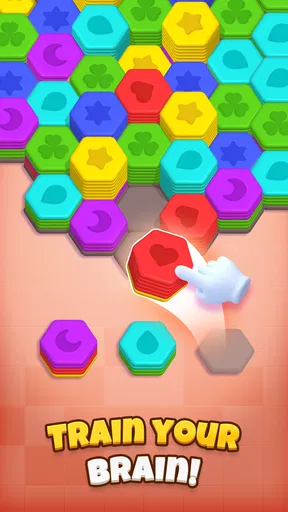
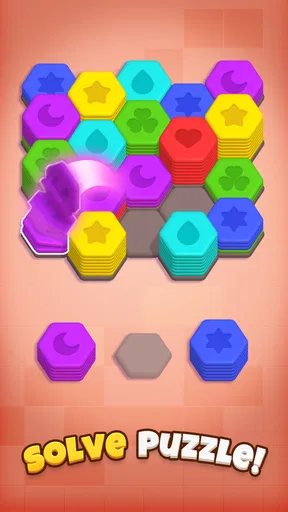
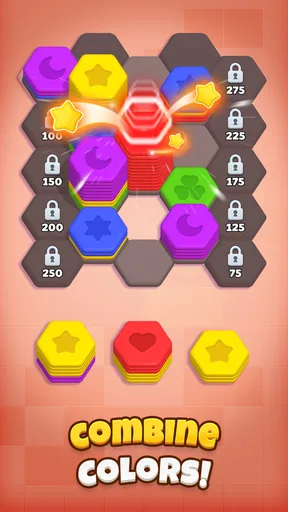
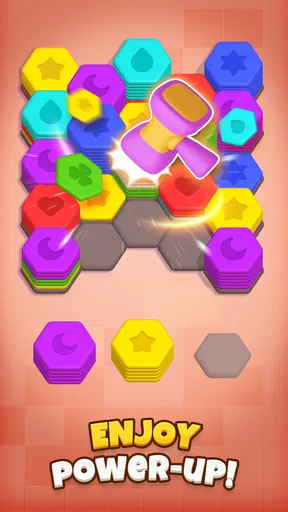
 Analysis by AppCompare
Hexa Crush is the kind of puzzle game I open when I want something simple to understand but still engaging enough to hold my attention for more than a minute. Its main idea is arranging and matching three-dimensional hexagonal blocks, with colors doing most of the visual work. That makes the first session immediately approachable: there is no complicated story to learn, no long tutorial to decode, and no need to memorize a large set of rules before playing.
After spending time with it, I found that the real appeal is not just matching colors. The interesting part is deciding where to place each piece before the board becomes crowded. A move that looks useful now can make the next few turns awkward, while a quieter placement can leave much more room for future matches. That gives this free puzzle game a pleasant rhythm between quick decisions and small moments of planning.
How the basic play loop feels in everyday use
The baseline workflow is easy to settle into. I start by looking at the available hexagonal blocks, identify the colors or shapes that can connect, and then place the piece that creates the cleanest immediate result without damaging the rest of the board. The three-dimensional presentation adds a little extra visual interest compared with a flat color grid, although the rules remain accessible enough for casual players.
It works particularly well in short breaks. I can play a little while waiting for an appointment, during a commute when I am seated, or at the end of the day when I do not want a demanding action game. The relaxed presentation supports that use, but the board still asks me to pay attention. It is not completely passive entertainment; careless placement can leave a difficult arrangement that takes several turns to recover from.
One habit made a noticeable difference in my sessions: I stopped treating every possible match as an automatic priority. Instead, I first checked whether the move would divide the remaining space into awkward pockets. A match that clears color immediately may be less valuable than a placement that keeps several future connections open. This is a small change, but it makes the game feel more strategic without making it stressful.
For a realistic everyday example, imagine opening the game for five minutes while coffee is brewing. A new player may simply place the most obvious block and enjoy the quick visual feedback. With a little experience, I would use that same short session to practice leaving a broad central area open, grouping similar colors near one another, and avoiding a corner that can only accept one kind of piece. That turns spare time into a repeatable puzzle exercise rather than random tapping.
The game also suits players who enjoy sorting tasks. If you like organizing colors, clearing clutter, or finding a neat arrangement from limited options, the board has a satisfying physical logic. It is less suitable for someone who needs a deep narrative, character progression, or a wide range of puzzle mechanics. The attraction here is the board itself and the gradual improvement in placement decisions.
Worth Reading Before You Choose

EA SPORTS FC Mobile 26 Is a Bigger Football Game, but It Takes Time

Flipboard Shows What News Apps Must Do Beyond the Feed

Switching to Android Auto Means Rethinking Your Driving Routine

Google Calendar Makes a Crowded Week Easier to Manage

Ludo King Makes the Most of the Minutes Between Plans

Baby Panda World Brings Quick Play to Modern Phones, but Its Game Library Feels Busy
What I would do before chasing a high score
My first recommendation is to spend a few rounds learning the shape of the play area instead of trying to play quickly. Three-dimensional blocks can make a placement look more useful than it really is, especially when several colors are close together. I found it helpful to pause briefly after each placement and ask which spaces will remain flexible afterward.
I would also avoid filling an attractive-looking cluster too early. A compact group can seem efficient, but if it blocks access to the surrounding spaces, it may reduce the number of useful choices later. Keeping a small amount of breathing room is often more valuable than making the board look tidy immediately.
Another practical habit is to look for moves that solve two problems at once. A good placement may complete a match while also opening a route for a different color. These are stronger than moves that only produce a short-term clear. They are not always available, so I do not wait forever for a perfect turn, but recognizing them improves the quality of a session.
The game’s broad audience is reflected in its Everyone content rating, and I think that is a fair description of its approachable presentation. Still, “easy to start” does not mean every board state is equally easy to solve. Younger players can enjoy the color-based activity, while adults may appreciate the quiet concentration. Anyone who finds repeated sorting or board management satisfying will probably understand the appeal quickly.
Settings and small choices worth checking
Before settling into regular play, I would check the available in-game settings and device controls rather than assuming the default setup is ideal. In a visually focused puzzle, comfort matters. Screen brightness, notification interruptions, and sound preferences can change how relaxing a session feels, even though they do not alter the puzzle rules themselves.
I prefer a setup that keeps the blocks easy to distinguish without making the display harsh. If I am playing at night, reducing brightness is more useful than trying to rush through rounds. During a busy day, I also silence unrelated notifications so a sudden interruption does not cause me to place a piece without thinking. These are simple adjustments, but they support the calm style the game is aiming for.
Because the game is free to download and play, I would also review the purchase controls on the device before handing it to a child. The title includes optional in-app purchases ranging from $0.99 to $99.99 per item. That does not make the game unsuitable for families, but it does make parental purchase protections sensible. A child can enjoy the puzzle without needing access to payment options.
The current version is 2.1.4, and the minimum requirement is Android 7.0. That gives the game a fairly broad reach among Android devices that are still in regular use. I would still keep the operating system updated where possible and make sure the device has enough free space for comfortable installation and updates. The game itself is lightweight in concept, but general device condition can affect any mobile experience.
One setting-related trade-off is that I would not expect customization to transform the game into a completely different experience. The core pleasure comes from placing and matching the blocks, so players looking for extensive visual themes, elaborate control schemes, or a large settings menu may find the options less important than they are in a simulation or role-playing game. Here, the best setup is mostly the one that removes distractions.
Faster patterns that still leave room to think
Experienced play is less about tapping rapidly and more about reducing bad decisions. I use a quick scan before every move: first the colors that are already close to a useful connection, then the spaces that must remain open, and finally the piece that creates the fewest future restrictions. This order keeps me from being distracted by the most visually obvious match.
I also try to build around flexibility rather than symmetry. A perfectly tidy arrangement can be tempting, but a slightly uneven board may offer more options. When two placements produce a similar immediate result, I choose the one that leaves more kinds of blocks able to fit nearby. That habit is especially useful when the board begins to fill and every placement has a larger consequence.
Another repeatable technique is delaying a convenient match when it can serve as a backup. If one color is easy to clear now but another area is close to becoming blocked, I may place the less convenient piece first. This keeps the emergency option available while I solve the more urgent problem. It is not a guaranteed formula, but it helps prevent the common mistake of using the only useful move too early.
For short sessions, I like setting a personal objective that does not depend on a particular score. One round might focus on keeping the center open; another might focus on avoiding isolated corners. This makes the game feel less repetitive because I am practicing a specific skill rather than simply repeating the same actions. It is also a better approach for players who become frustrated when a board does not develop perfectly.
These habits show why the game can appeal to both casual and experienced puzzle fans. A beginner can play by matching what looks obvious, while a more practiced player can think in terms of space, options, and timing. The difference is not a hidden rule system; it comes from using the same visible board more carefully.
Where the design reaches its limits
The calm, focused structure is also the game’s main limitation. If you want constant novelty, a campaign with a strong narrative, or puzzles that change dramatically from one mode to another, this may feel narrow. Its identity is built around one central activity, so the experience depends heavily on whether arranging colored hexagonal blocks is enjoyable to you in the first place.
I would not choose it as my main game for competitive excitement. The pace is better suited to concentration than adrenaline, and the satisfaction comes from making a clean sequence of decisions rather than reacting under pressure. Players who prefer action puzzles, timed challenges, or direct competition may be happier with a different title in the wider puzzle category.
There is also a natural risk of repetition. Even when the board requires thought, the basic interaction remains familiar. I think the best way to handle that is to play in focused bursts instead of forcing long sessions. The game works well as a break-time companion, but a player who expects hours of uninterrupted variety may notice the limited central loop sooner.
The free-to-play structure deserves a practical mention as well. The game costs nothing to download, which makes trying it low-risk, but optional purchases can change how a user approaches the experience. I would not spend anything until I knew whether the basic puzzle loop held my interest over several sessions. For families, I would activate purchase restrictions first; for adults, I would treat purchases as entirely optional rather than part of the reason to begin playing.
Compared with a traditional match-three game, this feels more spatial because the blocks are arranged in a hexagonal, three-dimensional style rather than simply swapped across a flat grid. Compared with a pure color-sorting game, it asks for more attention to placement and remaining space. On the other hand, players who prefer number puzzles or word puzzles may find the visual sorting approach less mentally varied. The better alternative depends on whether you want spatial organization, language, or calculation.
The developer, Kiwi Fun, has positioned the experience around a straightforward puzzle concept rather than a large fictional world. That focus is useful for quick access, but it also means the game has to earn continued attention through the quality of its board decisions. In my experience, it does that best when I approach it as a small daily mental break, not as an all-purpose mobile game.
Who should install it and who should skip it
I would recommend trying it if you enjoy calm color puzzles, spatial organization, and games that can be understood almost immediately. It is a good fit for someone who wants a free title for short sessions, especially when the goal is to relax while still making meaningful choices. The Everyone rating also makes its general presentation approachable for a wide range of players.
I would be more cautious if you lose interest quickly without unlockable stories, distinct characters, or several radically different modes. The same simplicity that makes it welcoming can feel restrictive if you need constant progression. Likewise, players who dislike planning around limited space may find the board more frustrating than soothing once careless placements begin to accumulate.
New users should give themselves a few rounds before deciding whether the game has enough depth. The first impression is mostly about matching colors, but the more useful skill is preserving future options. If that kind of gradual improvement sounds rewarding, the game has a fair chance of becoming a regular casual choice. If you want immediate intensity or a strong sense of adventure, another puzzle style will probably serve you better.
Its reach is already substantial, with more than a million installs and an average rating of 4.9 from roughly twenty-three thousand ratings. Those figures suggest that the simple formula connects with many players, although popularity alone is not a reason to overlook the personal fit. I would judge it by the feel of its board and by whether its repetition becomes comforting or tiring for you.
My final recommendation after settling into the routine
Hexa Crush works because it keeps its promise focused: place colorful three-dimensional hexagonal blocks, look for useful matches, and enjoy a quiet puzzle rhythm. I like that I can begin without preparation, but I also appreciate that better play comes from habits that are easy to practice: protect open space, delay convenient clears when necessary, and choose flexible placements over tidy-looking ones.
It is not the right choice for every puzzle fan. Its single-minded loop may not satisfy players who need deep variety, narrative progression, or competitive pressure. The purchase range also means families should set device safeguards before sharing it with children. Those are real considerations, not minor footnotes.
For me, the strongest use case is a short, repeatable break where I want something more engaging than passive scrolling but less demanding than a full strategy game. The free entry point makes it easy to test, the Everyone rating keeps the presentation broadly accessible, and the latest version, 2.1.4, supports its current place as a polished casual option.
My verdict is simple: choose it for calm spatial puzzle sessions, not for endless variety. If you enjoy finding order in a crowded board and improving through small, repeatable decisions, I think it is worth installing. If your ideal puzzle game needs a story, dramatic changes of pace, or a large collection of mechanics, I would look elsewhere.
Pros
- Simple hexagon-matching rules are easy for new players to learn.
- Short levels make it convenient for quick gaming sessions.
- Colorful visuals give the board a clean
- cheerful appearance.
- Gradually harder puzzles provide a steady challenge.
- Offline play is useful when you have no internet connection.
Cons
- Some stages can feel repetitive after extended play.
- Later puzzles may depend heavily on trial and error.
- Limited variety in the core gameplay may reduce long-term appeal.
- Hints or extra moves may be restricted or tied to rewards.
- Ads can interrupt the experience between levels.
FAQs for Hexa Crush
What is Hexa Crush and how do you play it?
Hexa Crush is a casual puzzle game built around arranging and matching hexagonal pieces on a board. After placing the available shapes, you try to complete lines or groups to clear tiles and earn points. The rules are easy to understand, but later levels require careful planning because limited space and awkward piece combinations can quickly block the board.
Is Hexa Crush free to download and play?
Hexa Crush can generally be downloaded and played without an upfront payment, making it accessible for casual players who want a quick puzzle experience. However, the game may include optional in-app purchases, advertisements, or paid benefits depending on the version and platform. Before downloading, check the store listing for current pricing, subscriptions, and purchase details.
Does Hexa Crush work without an internet connection?
Many of Hexa Crush’s core puzzle mechanics can be enjoyed offline, which is useful when traveling or when you have limited mobile data. Nevertheless, certain features may require an internet connection, including advertisements, online events, cloud synchronization, leaderboards, or updates. Availability can vary by device and version, so offline access should not be assumed for every feature.
Is Hexa Crush suitable for children and beginners?
Hexa Crush is relatively easy for beginners because it uses simple touch controls and straightforward matching mechanics. It can also be suitable for children, although parents should review the game’s advertisements, data permissions, and optional purchases before allowing independent play. Difficulty usually increases gradually, so younger players may enjoy the early stages while needing help with more challenging boards.
Are there advertisements or in-app purchases in Hexa Crush?
Hexa Crush may use advertisements to support its free download, with ads potentially appearing between rounds or when players request extra rewards. Some versions may also offer in-app purchases for removing ads, obtaining boosters, or progressing more quickly. The exact options can change after updates, so review the official Google Play or App Store listing before installing.


